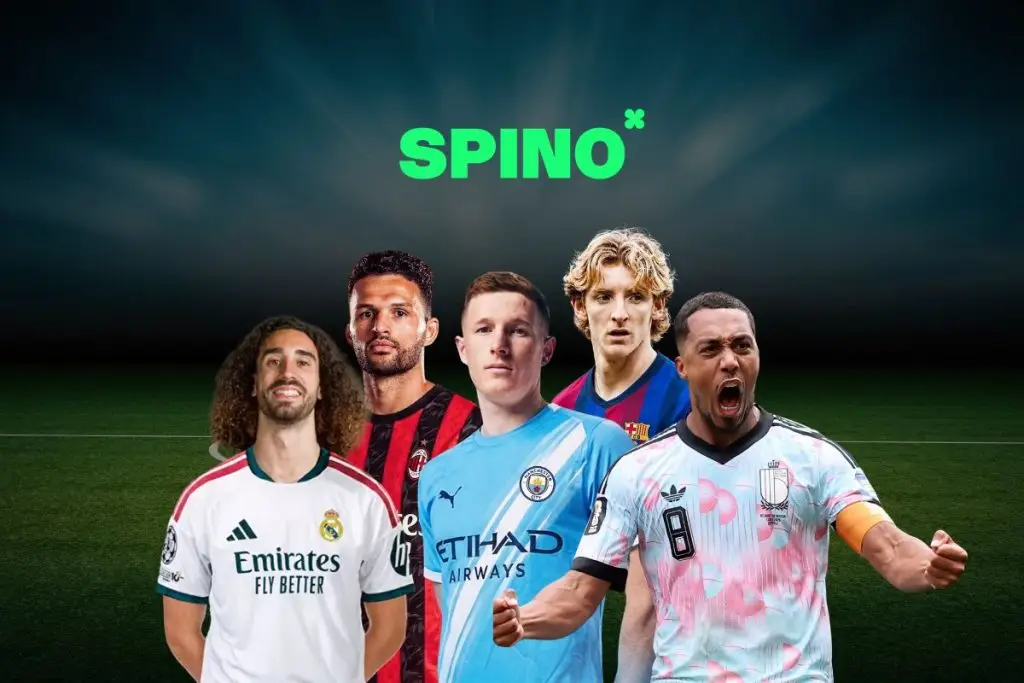


The summer 2026 transfer window has become one of the noisiest in recent years, and the reason is obvious: it opened while the 2026 World Cup was still underway. Clubs were watching players perform at the tournament and negotiating for them at the same time, and that pushed prices to levels we have not seen in a long while.
Every time a player produced a big performance at the World Cup, his price rose the same night, which pushed some clubs to move quickly before things got away from them.
The result? New record fees, mid-table clubs breaking their historical spending ceilings, and major names moving between leagues. In this article we go through the five biggest leagues — the Premier League, La Liga, Serie A, the Bundesliga and Ligue 1 — and look at the most significant completed deals in detail: the player, his former club, his new club and the fee. The information is based on official club announcements and market reporting as of the time of writing, and of course the window is still open, so the numbers may change.

As it does every year, the Premier League drives the market and sets the prices for everyone else. This summer the most expensive deal in the world came from England: Elliot Anderson moved from Nottingham Forest to Manchester City for €136 million. That is an enormous figure for a 23-year-old midfielder, but Pep Guardiola was looking for a player who could control the tempo and hold English nationality for homegrown quota purposes, and City paid without hesitation.
The second deal that turned heads was Sandro Tonali, who moved from Newcastle United to Tottenham Hotspur for around €115 million including add-ons. With that signing Tottenham announced their intention to compete for the title again — but at the same time they lost two important pieces: Luka Vušković, the 19-year-old Croatian defender, went to Brighton for €54 million, a club-record fee in Brighton’s history, and Will Lankshear joined Middlesbrough for €11.7 million.
Aston Villa were among the most active clubs. They broke their all-time transfer record to sign the Swiss talent Johan Manzambi from Freiburg for €70 million including bonuses, and also added João Gomes from Wolverhampton for around £35 million on a five-year deal, along with Alejandro Garnacho from Chelsea on loan with an obligation to buy. On the other side, Villa lost Youri Tielemans to Manchester United after his €41 million release clause was triggered, with a contract running to 2031.
Arsenal, the champions, worked more shrewdly than extravagantly. The Gunners signed Greek winger Christos Tzolis from Club Brugge for €40 million on a five-year deal, activated the purchase of Ecuadorian defender Piero Hincapié from Bayer Leverkusen for €40 million after a season on loan, and signed French goalkeeper Illan Meslier on a free transfer following the expiry of his Leeds United contract. Well-judged business, two pieces of it at no fee.
Even the promoted and mid-table clubs entered the market forcefully. Ipswich Town, back in the Premier League, signed Ghanaian winger Abdul Fatawu from Leicester City for €23.5 million and added defender Issa Diop from Fulham for €10 million. Brentford paid €17.5 million for English winger Jaidon Anthony from Burnley. Manchester City, meanwhile, did not stop at Anderson, adding the young prospect Jeremy Monga from Leicester for €15 million.
Alongside the paid transfers, there has been strong movement among players out of contract. Kieran Trippier left Newcastle after four years and joined Wolverhampton on a free, and Óscar Mingueza moved from Celta Vigo to Crystal Palace at no fee on a deal running to 2030. This kind of business has become an important weapon for clubs looking to strengthen a squad without breaking the budget.
In Spain, the biggest story was not a player signing but a change on the bench: José Mourinho returned to Real Madrid, and the club built the squad to his preferences. Madrid signed left-back Marc Cucurella from Chelsea for £47.5 million plus £4.3 million in variables, on a six-year contract to 2032. They also added French defender Ibrahima Konaté on a free after his Liverpool contract expired, Bernardo Silva from Manchester City, and Denzel Dumfries from Inter Milan after paying a €20 million release clause on a four-year deal. Four signings, only one of them at a substantial fee — smart planning from a financial standpoint.
Barcelona did precisely the opposite and went for the bold move. The Catalans signed Anthony Gordon from Newcastle for £69 million, a genuine surprise from a club that has consistently pointed to its financial position. They also added German winger Karim Adeyemi from Borussia Dortmund for €22 million plus €7 million in variables.
Atlético Madrid did not stand still either: they signed Danish midfielder Morten Hjulmand for €40 million plus bonuses, and added Spanish full-back Alejandro Grimaldo on a four-year contract.
In Italy, Milan were the biggest spenders. The Rossoneri signed Portuguese striker Gonçalo Ramos from Paris Saint-Germain for €74 million, and added Spanish defender Mario Gila from Lazio for €30 million on a five-year deal — all under new manager Rúben Amorim.
Napoli completed an important deal in a clever way: Rasmus Højlund joined permanently from Manchester United for £38 million once the club qualified for the Champions League and the obligation-to-buy clause was triggered. Juventus, by contrast, were obliged to buy Loïs Openda for £35 million despite a very poor season from the player, and added Turkish full-back Zeki Çelik from Roma. Fiorentina paid €26 million plus €4 million in bonuses for the Ivorian prospect Christ Oulaï, with the selling club retaining 10% of any future sale. That last detail has become close to standard practice in the current market: selling clubs no longer sell outright, but hold a share of the next deal.
Broadly, Serie A this summer leaned heavily on obligation-to-buy clauses embedded in last season’s loan agreements — a method that lets a club spread the cost of a transfer across two years rather than paying it in one instalment.
What stands out this season is that the movement of stars between England and Spain has returned in force after years of complete Premier League dominance. Gordon, Cucurella and Silva all left English football for La Liga, which is something we have not seen much of in recent years.
In Germany, Bayern Munich focused on young ages and large fees. The Bavarians signed German left-back Nathaniel Brown from Eintracht Frankfurt for €50 million on a contract running to 2031, and added Moroccan midfielder Ismael Saibari from PSV Eindhoven for around €55 million. Two signings that make clear Bayern are building for the next five years rather than for a single season.
Bayer Leverkusen signed Portuguese winger Afonso Moreira from Lyon for €30 million. Borussia Dortmund chose selling over buying, moving Adeyemi to Barcelona — their well-known policy: develop, then sell at a profit.
In France, the movement has been more about departures than arrivals. Paris Saint-Germain — the league champions — sold Ramos to Milan for €74 million and are close to completing the exit of Lee Kang-in to Atlético Madrid for around €40 million. At the same time the Paris club are working on signing Maghnes Akliouche from Monaco and full-back Lucas Digne from Aston Villa, both still at the negotiation stage.
Marseille have been the most active in the French market: they signed Argentine defender Facundo Medina from Lens for €18 million, American Timothy Weah from Juventus for €14 million, and Dutchman Quinten Timber from Feyenoord on a deal to 2030. Lille signed the young prospect Basar Onal from NEC Nijmegen for €14.5 million including bonuses.
Generally, Ligue 1 this summer has been selling more than buying, with Marseille and Lille close to the only clubs investing visibly. The rest have chosen to strengthen with young players or limited-value deals, an extension of a well-established policy in France: develop talent and sell it to the bigger leagues.
The conclusion? Summer 2026 has demonstrated that the market is no longer the preserve of four or five clubs. Manchester City and Tottenham paid historic figures, Brighton and Aston Villa broke their own records, and Real Madrid assembled a full squad on a reasonable budget through free transfers and release clauses. The window remains open until the start of September, which means more big deals are still on the way.

About Me
With over 20 years of hands-on experience in the online gambling industry, I have built my career around understanding how casinos, sportsbooks, and players have evolved in the digital world. My work goes beyond simply writing about games and betting; I research platforms, analyze industry trends, and turn complex information into practical content that readers can actually use.
My expertise covers online casinos, sports betting, slots, live dealer games, casino bonuses, payment methods, and responsible gambling. Years of following the industry have taught me that credibility matters. That is why I approach every article with the same principles: research carefully, explain clearly, and never sacrifice accuracy for attention.
I also combine my iGaming background with SEO knowledge, allowing me to create content that works for both readers and search engines. I closely follow new casino launches, changing regulations, emerging technologies, and player trends across international markets to keep my work relevant and up to date.
After two decades in the industry, I still enjoy discovering what comes next. When I am away from my desk, you will usually find me following football, traveling, discovering new cultures, or exploring the latest developments in technology and online gaming.